We are proud to be celebrating 25 years within the recruitment industry this week on Friday 5th May, and wanted to take this opportunity to say a big THANK YOU to all our past and present work colleagues, candidates, and clients.
Throughout these 25 years, we have been through recessions, and a pandemic and seen the recruitment industry change rapidly over the years. However, we are pleased to say one thing that has not changed is commitment and focus in finding the right candidates for the right job and that has been our mission for over a quarter of a century.
It has been hard work, working long hours, ensuring we are available out of hours 24/7 to give our clients and candidates the service they deserve but would not change it for the world.
We have laughed, we have had fun and we have met some great characters and we look forward to continuing to provide a quality service to our clients and candidates.
So once again THANK YOU for all your support and here is to the next 25 years.
The Coronation of His Majesty The King will take place on Saturday 6th May 2023.
The Coronation Ceremony will take place at Westminster Abbey, London, and will be conducted by the Archbishop of Canterbury.
The Ceremony will see His Majesty King Charles III crowned alongside The Queen Consort.
The Coronation will reflect the monarch’s role today and look towards the future while being rooted in longstanding traditions and pageantry.
About The King
King Charles III, formerly known as The Prince of Wales, became King on the death of his mother Queen Elizabeth II on 8 September 2022.
In addition to his official and ceremonial duties in the United Kingdom and overseas as The Prince of Wales, His Majesty has taken a keen and active interest in all areas of public life for decades. The King has been instrumental in establishing more than 20 charities over 40 years, including The Prince’s Trust, The Prince’s Foundation and The Prince of Wales’s Charitable Fund (PWCF).
His Majesty has worked closely with many organisations, publicly supporting a wide variety of causes relating to the environment, rural communities, the built environment, the arts, healthcare and education.
As Their Majesties’ Coronation draws closer, read on for 25 fun facts about The King.
Prince Charles Philip Arthur George was born at Buckingham Palace on 14th November 1948 at 9.14pm, weighing 7lbs 6oz. The Prince was christened on 15th December 1948 at Buckingham Palace.
The former Prince Charles became heir apparent (next in line to the throne) at the age of three years old in 1952, and went onto become the longest serving Prince of Wales in 2017. His Majesty was the first heir to see his mother crowned as Sovereign.
The King has three siblings, two sons, two step-children, five grandchildren and five step-grandchildren.
The first formal photograph of The King was taken by Cecil Beaton in December 1948.
His Majesty’s first visit abroad was to Malta, when he was five years old. Since 1969, he has visited 48 Commonwealth countries, many of them on several occasions.
The King was the first heir to the throne to earn a university degree. The King studied archaeology and anthropology in his first year at the University of Cambridge, switching to history for the remainder of his degree. His Majesty also spent a term at the University College of Wales at Aberystwyth (April to June 1969) learning Welsh.
While at school, The King played the piano, trumpet and cello. He continued to play the cello while an undergraduate at Cambridge, performing in a symphony concert by the Trinity College Orchestra on 4th December 1967.
His Majesty obtained his RAF wings as Flight Lieutenant Wales in August 1971.
The King commanded HMS Bronington in 1976, while serving in the Royal Navy.
His Majesty started charity The Prince’s Trust with his Navy severance pay of just over £7000 in 1976. The charity has now supported over one million young people.
His Majesty was the first member of The Royal Family to successfully complete the Parachute Regiment’s training course, before he was appointed Colonel-in-Chief of the Regiment in 1977.
The King, as Prince of Wales, was given the title, ‘Keeper of the Cows’, by the Masai in Tanzania in 2011 to recognise his work as a farmer.
In the Pacific Island of Vanuatu, His Majesty was given the title Mal Menaringmanu (High Chief) in 2018.
The King also had a frog named after him: Hyloscirtus Princecherlesi or Prince Charles Magnificent Tree Frog.
As Prince of Wales, His Majesty became President or Patron of over 800 charities and initiatives in total.
A champion of environmental issues for over 50 years, The King first spoke publicly about his concerns on pollution and plastics and their impact on the natural world in 1970.
At the age of 16 years, The King undertook his first official Royal duty in June 1965, attending a student garden party at the Palace of Holyroodhouse.
His Majesty is an author. He wrote The Old Man of Lochnagar, based on stories he told his younger brothers growing up. The King has also written books on the natural world and the environment including ‘Harmony’; and ‘Climate Change, a Ladybird Expert Book’.
The King is a keen painter and had a watercolour displayed in the Royal Academy’s 1987 summer exhibition, after it was submitted anonymously.
In 1975, His Majesty became a member of the Magic Circle, a society of stage magicians founded in London in 1905, after passing his audition with a magic trick.
In 1980, The King rode in the Ludlow steeplechase and finished second. His Majesty has been a keen equestrian throughout his life and played polo until 2005.
The King made a cameo appearance on Coronation Street in 2000, and on EastEnders in 2022 in celebration of Queen Elizabeth II’s Platinum Jubilee.
His Majesty has presented the weather forecast on the BBC. This took place during a visit to BBC Scotland’s studios in 2012.
The King purchased an Aston Martin DB6 Mark 2 Volante in November 1970, which has since been converted to run on E85 bioethanol made from by-products of the wine and cheese industries. The Prince and Princess of Wales left Buckingham Palace in His Majesty’s Aston Martin following their wedding in April 2011.
The King often carries out tree planting ceremonies during engagements. After planting each tree, His Majesty gives a branch a friendly shake to wish them well.
3 Ways a Recruitment Agency can support your business.
When it comes to recruitment and hiring it can often become a stressful and time-consuming process with some businesses not knowing where to start or simply not having enough time to sift through applications, arrange interviews and ultimately find the right person for the job.
This is where an agency comes in, an agency will work with you in finding out exactly what you need in terms of candidate skills, experience and personality fit. Taking the stress away from the recruitment process and freeing up your time to focus on your business.
Here are just 3 ways a recruitment agency can add value to your business.
Candidate Attraction – giving you access to a higher pool of candidates.
Direct Response will manage the whole process on attracting candidates for your job role. We will create an eye-catching job description, showcase what you have to offer and advertise these across a wide range of job boards and social media channels ensuring your job is seen by those looking for new opportunities.
At Direct Response we all have established a large database of candidates over the years meaning we have access to candidates who may not be active on the job market but could have the skills you are looking for, giving us a greater pool of candidates to approach on your behalf.
We Manage the process for you.
Having to sift through a large number of applications can be time consuming, but here at Direct Response we will handle all that for you. We will manage all applications and short list candidates who are suitable for the role. We will pre-screen all candidates, discussing the role in detail, salary expectations and so on before sending all suitable candidates over to you attached with a CV and profile detailing their suitability for the role.
Once you have selected which candidates you would like to interview, we will manage the interview process for you, scheduling and assisting with the all-important interviews.
Offer, Rejection and Negotiation.
So, you have found a candidate you would love to join your business and its time to make an offer, we will support your business in making that all important job offer.
Direct Response will assist with the whole offer, negotiating salary, carrying out references checks and supporting with the onboarding process of your new recruit.
We will also ensure any candidates you have been declined during your recruitment process are informed within a polite manner so you can concentrate on what you do best within your company.
If you would like to find out more about how Direct Response can support your business, then get in touch with us today to see how we can help.
National Human Trafficking Awareness Day on January 11 raises awareness of the persistent issue of human trafficking. Though the entire month of January has already been recognized as National Slavery and Human Trafficking Prevention Month, this day is specifically dedicated to awareness and prevention of the illegal practice. This holiday is also separate from the World Day Against Trafficking Persons, as established by the United Nations. Since the Senate established this day of observance in 2007, it has drawn massive public support from individual donations to government-organized events. The horrific injustice of human trafficking can affect people of any race and background, and on this day we are all called to fight human trafficking wherever it exists.
Mental health can affect us all at different times in our lives and with work being here we spend a lot of our time during the working week, its important that employers and colleagues alike to be able to support those who may be experiencing mental health in the workplace.
Its important that your employees are aware they can come to you should they be struggling or generally just need some time out or someone to talk to and it’s an employer’s job to ensure you have that open door policy to allow employees to do this.
However not everyone feels comfortable when it comes to talking about their feelings or asking for help, so how do we recognise if someone is struggling within the workplace.
Is you employee / colleague struggling with mental health and what are the tell tell signs to look out for.
Isolating themselves from other workers and being very quiet or not talkative. Now there are some people who generally are just not that talkative but if an employee or colleague who was once very talkative and social becomes distance and starts isolating themselves from how they normally behave it could be a sign they are going through some troubles.
Having increased absences from work.
A person may become more aggressive and suffer from increased mood swings.
Having difficulty concentrating at work and no motivation to complete tasks.
Sometimes it can be easy t spot a change in someone’s behaviour or if someone is perhaps not in a good mood, we can pick these up easily but there are times where people who may be struggling and out on a go mask so to speak.
Which brings me on to what can we do in the workplace to encourage mental health awareness and what support can you provide?
Encourage employees to talk, ensure employees know you are there for them to discuss any problems they may be facing and ensure they feel welcomed in being able to express any feelings.
Have regular one to one’s with employees, it’s a great way to build a bound with employees, find out how they are getting on in the workplace and gives them the opportunity to express themselves to you.
Encouraging mental health support within the workplace such as mental health awareness training or workshops or having dedicated trained individuals or councillors or mental health champions being available, so employees know where to turn if they need that extra support.
Respect confidentiality. Remember mental health information is confidential and sensitive. Don’t pass on information unnecessarily – not least because this breach of trust could negatively impact someone’s mental health.
Offer flexibility or a free space employees can go to and take some take away from the workplace to have a breather and gather their thoughts.
Offer a 24/7 employee assistant program, which is an outside service which employees can access for a range of advice or support.
It is important to remember that an employee who is struggling can feel vulnerable or may be embarrassed to ask for help, so its important to raise as much awareness within the workplace.
Create a supportive and open environment and ensure mental health is not frowned upon and that your door is always open.
If you would like to take a look further about what training or work shops surrounding mental health which may health your organisation, then check out the links below.
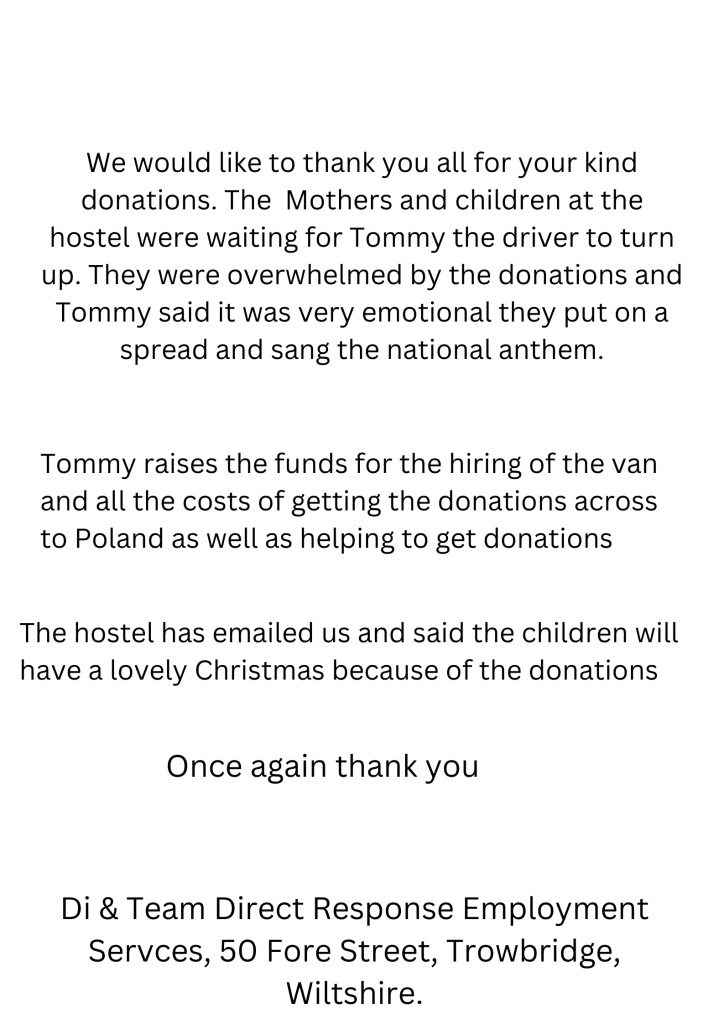
Photos from the humanitarian trip to the Ukrainian women’s and children’s shelter in Poland Tommy Sprangle made last week.
Tommy is hoping to plan another trip in October before winter starts and donations of Christmas presents for the children and food are desperately needed as well as sanitary products, Nappies, etc.
A Big Thank you to everyone who has donated it was much appreciated by everyone back at the hostel.
If you would like to donate Please contact us on 07968 408817 or email [email protected].
Since Covid hit us the home office took a temporary change to the way employers were able to legally check right to work documents. These temporary measures will be ending in September so here is what you need to know to ensure from the 1st of October 2022, you are compliant with your employee right to work checks.
So what documents are you able to accept as part of your right to work checks?
I have included a link below which includes a full list of the right to work documents which are accepted by the home office to confirm an employee’s right to work.
Ensure when checking documents, you see the original and take a copy of the original right to work document, signing the document to confirm you have seen the original and dating the photocopy to confirm when you completed this check.
What if they do not have the correct documents or if I am still not sure if the documents are legit?
If after checking the documents you are still not 100% sure or if candidates are not able to provide original documents, then its worth using the link below.
You can make use of the home office employer checking service which will be able to assist in confirming if your employee or prospective employee as the right to work, using the link below.
My Employee has a share code, what do I need to do next?
If your employee or prospective employee has a share code, you simply can check the government website using the share code and it will be able to provide if that person has the right to work.
Once you have checked online. Print the confirmation and save within your employee records to confirm you have carried out the check or save digitally.
So, what exactly is changing from the 1st of October?
During Covid the government put temporary measures in place to assist employers being able to check right to work documents remotely. This involved employer being able to check right to work documents over video call with the employee holding up the right to work document to the camera on a video call and sending a photocopy / photo to the employer for their records.
From the 1st of October this will stop, and employers will no longer be able to check the right to work documents without seeing the original in person or without using a IDSP service which is a third-party service provider which can check an employee’s right to work on your behalf.
Going forward there will be 3 ways you are able to confirm a candidate’s right to work to ensure you are compliant.
Check candidates right to work documents in person and taking a copy of the document, ensuring you date and sign to confirm when you checked the original document.
If checking documents from List A, you will not need to do any further checks on the individual. If checking documents from List B you will need to ensure you do, follow up checks to ensure the individual continues to have eligibility to work.
Use a IDSP (Identity Service Provider) to check a person’s eligibility to work, there are many providers that are certified to carry out these checks, you may need to pay a fee in order for them to carry out the checks on your behalf. You will need to obtain a clear copy from the provider of the check and keep this on record for the duration of the individual’s employment and 2 years after that person has finished employment with the employer.
A list of home office approved providers at the link below.
Use the home office online right to work checking service, it will not be possible to check everyone’s right to work using this service and when this service is not available you will need to complete a manual check.
Ensure you retain a copy of the digital right to work check for the duration of the individual’s employment and 2 years after this.
Where a right to work check has been conducted using the services of an IDSP on British and Irish citizens, a continuous statutory excuse will have been established and there is no requirement to see the documents listed above or to carry out a follow up check.
Where a right to work check has been conducted using the Home Office online service, the information is provided in real-time directly from home Office systems and there is no requirement to see the documents listed above.
Hopefully you are all up to speed but if you ae still not up to speed or want to have a chat with us on checking an employee’s right to work, then get in touch and we would be more than happy to assist.
The ball is very much in the candidate’s court at the moment as we are in a candidate driven market, so you may be wondering what you can do to keep current staff engaged and attract new talent?
There once was a time where it was very much all about the salary, candidates went where the money was and even though this is still high on a candidates list, there is so much more to it.
With the ever-changing market, working from home and the increase in the desire to have that work life balance, candidates are looking at the overall package as opposed to what they would take home at the end of the month.
So, what exactly are candidates wanting and view as high or musts on their check list when looking for a new position?
We have asked the question and created a list of what candidates have said are important when looking at their next role.
Number one on the list…… Flexibility!
Work life balance is key and what was the norm a few years back, working 5 days a week 9-5 has changed, having that flexibility is a must, especially when it comes to the working family.
So what flexibility are they looking for?
Working 4 days a week.
Having school hours or the flexibility to start a bit later or finish early.
Early finish on a Friday.
The flexibility to work from home if they have the technology / capacity to do so.
For the working parent having a company that is understanding when it comes to childcare, such as doing the school run, having time off if the child is poorly or generally being flexible with working around school holidays, school performances is a real must.
If it has been a while since you looked at how the company views flexible working, it may be worth having a look at what your company can do to support your workers.
Company Culture:
That’s second on the list. What is your company culture like? Do you have an open-door policy? Are employees made to feel they can express feelings / ideas and do you offer a friendly working environment?
The last thing you want is an employee that dreads coming in to work, so what can you do to build that team spirit and ensure employees are happy?
Listening is key, try not to micromanage and let employees have the freedom to complete their job knowing they have support if needed.
Create team building exercises, make the office / workspace fun and have a laugh while you work. Yes, get the job done but nobody wants to work in strict environment.
We spend a lot of time with our colleagues so having a team which feels friendly and supportive makes employees enjoy being in work.
Salary:
Here it is, Salary! Third on the list as being the most important when looking for a new opportunity.
Candidates need to feel they are being paid what they are worth and offering a fair salary for the job is just as important as the other added additional benefits.
There are a number of points that companies can do to make sure they are remaining competitive.
Regular bench marking, have a look at what your competitors are paying.
Regular salary reviews, if a candidate is doing well then why not show appreciation and offer that pay rise.
Bonuses and commission, is this something you could offer employees?
At the end of the day, if an employee feels valued they will go the extra mile and productivity is key with business performance.
Holiday Entitlement
Fourth on the list is Holiday entitlement, a lot of companies are still offering the standard 28 days (Normally 20 days plus 8 bank holidays) holiday, which is the minimal legal entitlement. So, can this be classed as a benefit when you are offering the standard, as let’s face it, legally you have to give this amount to candidates, so where is the added benefit?
While most companies will offer an increase with years of service, perhaps it is worth looking at offering an increased entitlement from the very beginning of the candidate staring work.
Having enhanced holiday, is a must for companies to look into, along with some companies offering the option to also buy or sell additional holiday.
Additional Benefits:
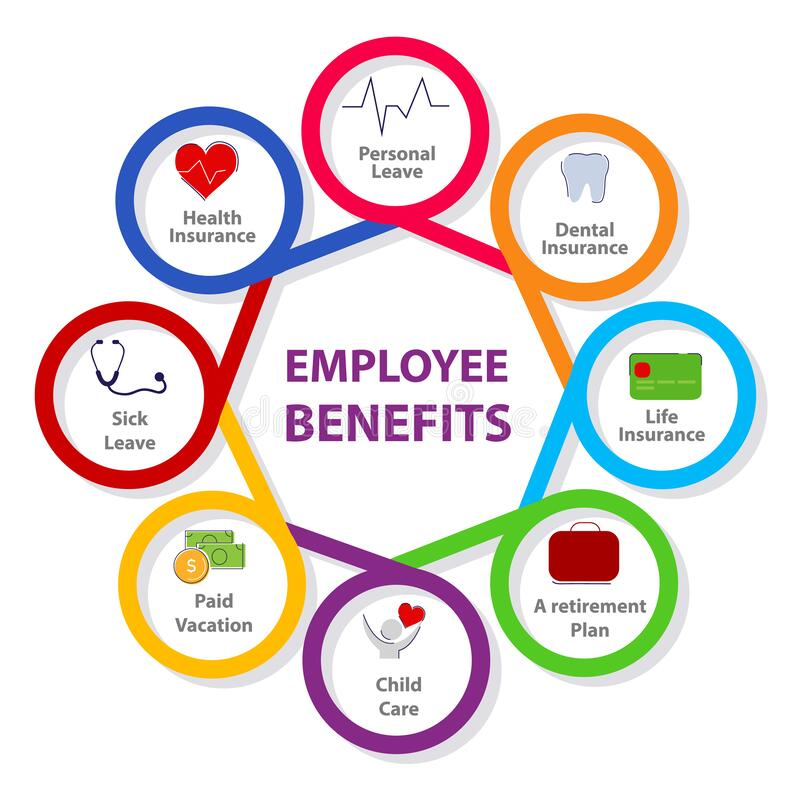
We have also listed some additional benefits below which may make the package a little sweeter for your employees.
Enhanced pension contributions.
Health Insurance / Free Gym membership.
Discounts on products / vouchers / money off on the high street / perk box.
Rewards for service / performance such as money, holiday vouchers etc.
Training and Development.
Enhancing skills and qualifications with paid courses.
So, whilst salary is an important factor when a candidates employee looks at another job or is considering leaving, Employers need to be looking at the whole benefit package.